Agricultural Export License is an official government-issued permit that allows businesses or individuals to legally ship agricultural products from one country to another. It ensures compliance with national and international trade regulations, protects domestic food security.
Term
Agricultural Export License
Category
Regulation

An Agricultural Export License is a legal document issued by a country’s government that authorizes the export of agricultural products. These products can include raw crops like vanilla, coffee. Or rice, as well as processed foods, livestock. Or agricultural byproducts. The license serves as proof that the exported goods comply with both the exporting country’s laws and the importing country’s requirements. Without this license, customs authorities may block shipments, impose fines. Or even confiscate goods.
The purpose of the license extends beyond simple trade permission. It helps governments monitor the flow of agricultural products, ensuring that exports don't deplete domestic supplies or destabilize local markets. For example, if a country exports too much of a staple crop like rice, it could lead to shortages and higher prices for its own citizens. The license also ensures that exported goods meet international standards for safety, quality. And plant or animal health, which is critical for maintaining trade relationships with other countries.
The process of obtaining an Agricultural Export License typically begins with an application submitted to the relevant government agency, such as the Ministry of Agriculture or a trade regulatory body. In Madagascar, this might involve the Ministry of Agriculture, Livestock. And Fisheries or the Economic Development Board of Madagascar (EDBM). The application requires detailed information about the product, including its type, quantity, destination. And intended use. Some products may also require additional certifications, such as a Phytosanitary Certificate, to confirm they're free from pests or diseases.
Once submitted, the application undergoes review by government officials. They verify that the product meets all legal and regulatory requirements, including compliance with international treaties or agreements. For instance, if Madagascar has a trade agreement with the European Union, the exported goods must meet EU standards for pesticide residues, packaging. And labeling. If the application is approved, the license is issued, often with a validity period or specific conditions, such as limits on the quantity that can be exported.
The license must accompany the shipment during transit and may be checked by customs authorities at both the exporting and importing countries. Some licenses are issued for a single shipment. While others may cover multiple exports over a set period. Businesses must renew or reapply for the license as needed, especially if regulations or trade agreements change.
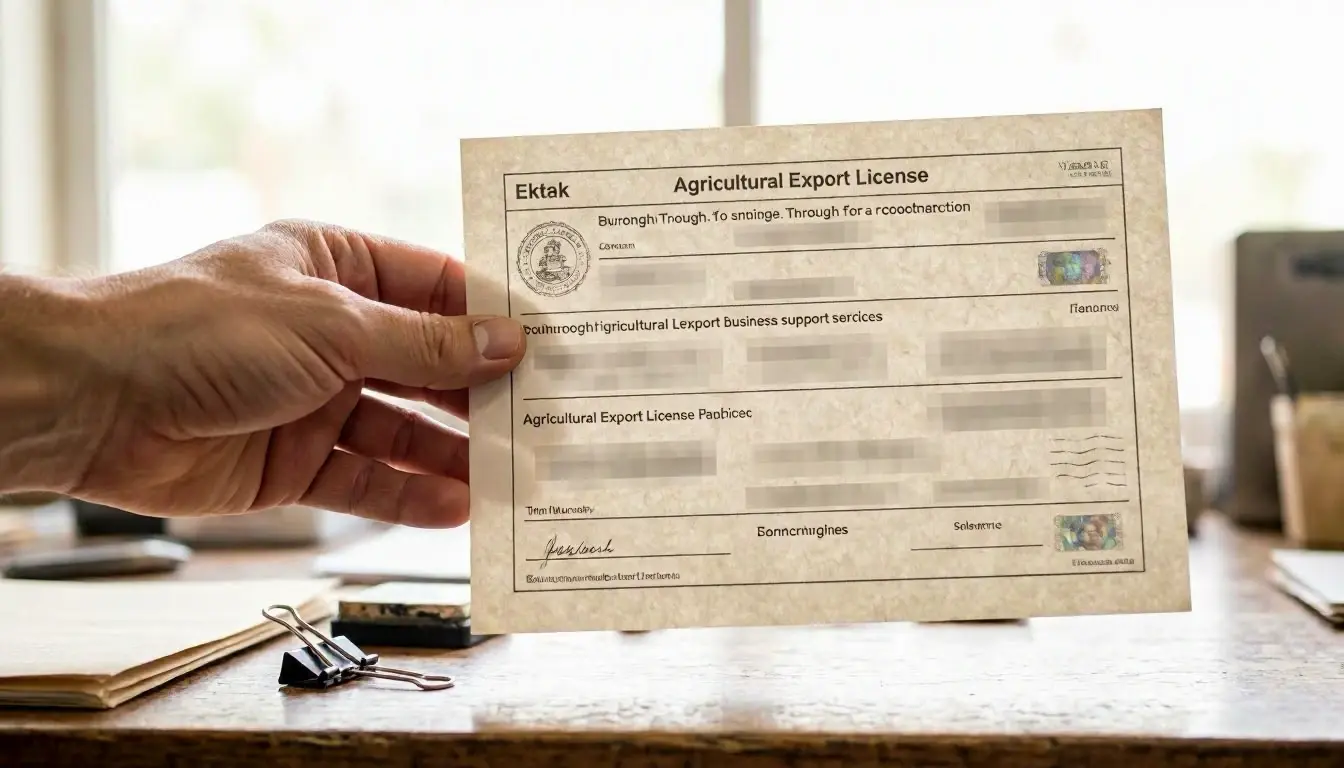
An Agricultural Export License is essential for businesses involved in international trade because it ensures legal compliance and avoids costly disruptions. Without the license, shipments can be delayed, seized. Or returned, leading to financial losses and damaged relationships with buyers. For countries like Madagascar, where agriculture is a major economic sector, the license also helps protect domestic food security by preventing excessive exports of staple crops.
The license also plays a critical role in maintaining the reputation of a country’s agricultural products in global markets. When exporters consistently meet international standards, importing countries are more likely to trust and continue trading with them. This can lead to better trade terms, higher prices for exported goods. And increased demand. Conversely, failing to comply with export regulations can result in trade bans or restrictions, harming the entire agricultural sector.
An Agricultural Export License is most important when businesses plan to export agricultural products internationally. This includes scenarios such as entering new markets, fulfilling large contracts with foreign buyers. Or exporting regulated products like live plants, seeds. Or animal products. The license is also critical when exporting to countries with strict import regulations, such as the European Union, the United States. Or Japan, where non-compliance can lead to rejected shipments or legal penalties.
Businesses should also pay close attention to the license when dealing with high-value or sensitive products. For example, Madagascar’s vanilla industry relies heavily on export licenses to ensure that only quality beans reach international markets. Similarly, exporters of essential oils or spices must comply with specific regulations to avoid contamination or mislabeling issues. And the license becomes crucial during periods of high demand, such as seasonal harvests, when governments may impose temporary export restrictions to stabilize domestic prices.
In practice, Finally, the license is important when trade agreements or regulations change. For instance, if a new free trade agreement is signed, exporters may need to update their licenses to take advantage of reduced tariffs or new market access. Staying informed about these changes helps businesses avoid compliance risks and capitalize on new opportunities.
Agricultural Export Licenses often require coordination between multiple government agencies. Exporters should start the application process well in advance of planned shipments, as delays in approval can disrupt supply chains and contractual obligations.
A Madagascar-based company exporting vanilla beans to France must obtain an Agricultural Export License from Malagasy authorities. The license ensures the beans meet EU standards for pesticide residues and packaging. Without it, French customs could reject the shipment, leading to financial losses and reputational damage.
Agent In Mada
Contact Agent In Mada for practical guidance on Agricultural Export License and related business support services work in Madagascar.